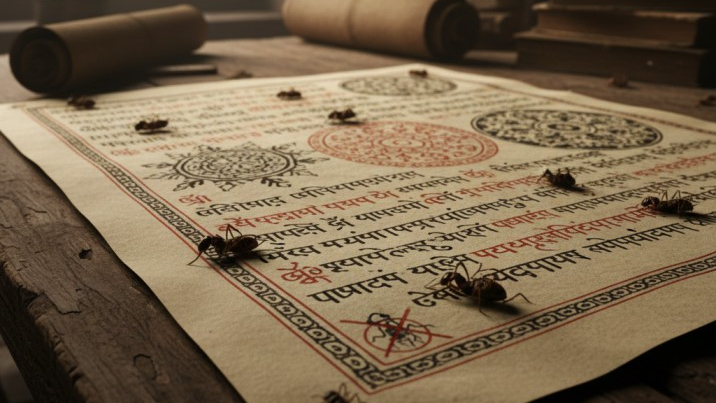
In a monastery tucked into the folds of the Nepali hills, a manuscript lies open.
The ink is dark. The fibers are intact. The pages turn without crumbling. There is no climate control, no archival vault, no silica gel. And yet the text, more than a thousand years old, looks unsettlingly young.
The secret is not reverence. It is poison.
This is the story of Lokta paper, a Himalayan invention that solved the problem of preservation long before modern archives existed, and did so using biology rather than technology.
The Archive That Refused to Decay
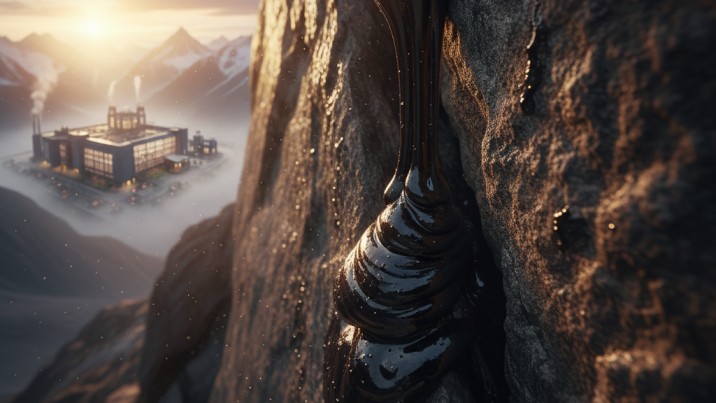
Lokta paper is made from the bark of Daphne bholua and Daphne papyracea, shrubs that grow wild between 1,600 and 4,000 meters in Nepal’s middle hills.
These plants evolved chemical defenses to survive altitude, pests, and poor soil. Their bark is naturally toxic to insects and resistant to fungal growth.
When turned into paper, those defenses remain active.
This is why termites ignore Lokta. This is why mold struggles to grow on it. This is why centuries pass and the paper does not fail.
Modern archives rely on controlled environments. The Himalayas relied on chemistry.
The Manuscript That Refused to Die
A Story of the “Toxic Shield”
Among monks in the Mustang and Helambu regions, there is a story about a hidden library found inside a cave sealed by a rockslide for more than three centuries.
When the cave was finally breached, the air inside was thick with damp earth and rot. The wooden chests that once held the monastery’s records had collapsed into soft, spongy mulch. Silk wrappings had been eaten away by silverfish until they were nothing but ghost threads.
But inside the decay, the Lokta manuscripts remained.
They sat in the debris, intact and legible, as if time had passed around them instead of through them.
One young monk, skeptical of the paper’s reputation, noticed a dead wood-boring beetle lying directly on a page. It had bitten into the corner of the Lokta sheet, died instantly, and remained there. A tiny, shriveled warning preserved alongside the scripture.
The elder monk smiled and said, “The mountain does not want its secrets to be digested. It gave the Lokta its bitterness so our history would remain too sharp to swallow.”
This is the toxic archive in action. Not magic. Not ritual. Biology continued its work long after the plant was cut.
Why Digital Memory Is Surprisingly Weak
We like to believe our era has solved preservation.
We store data in clouds, replicate files across servers, encrypt everything.
Yet digital memory is astonishingly fragile. It depends on electricity, hardware compatibility, software continuity, and corporate survival.
A power cut, a format change, or a server shutdown can erase decades instantly.
This fragility is precisely why even Japan, one of the world’s most technologically advanced economies still prints its currency using fibers derived from the Himalayan Argeli plant.
Lokta paper needs none of this.
It survives damp monsoon air, freezing winters, neglect, and time. It does not require maintenance. It simply exists.
How Poison Became Paper
The process of making Lokta paper is almost aggressively low-tech.
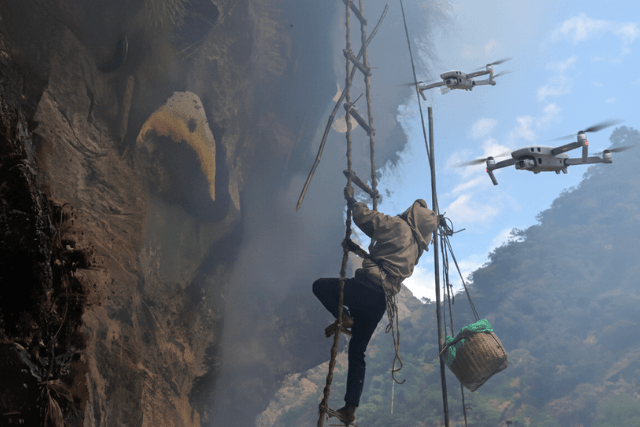
Harvesters cut mature Lokta shrubs above ground, allowing the roots to regenerate. Bark is stripped, sun-dried, then boiled, often with ash, to soften the fibers. The pulp is beaten by hand and poured onto wooden frames where it settles into sheets.
There is no bleaching. No synthetic binders. No coatings.
The toxins remain embedded in the fiber matrix.
Industrial paper would consider this a flaw. History calls it durability.
Insects Know What We Ignore
Termites, silverfish, and beetles eventually destroy most organic paper. They cannot digest Lokta.
The same chemical compounds that protected the living plant continue protecting the dead fiber. Mold, too, struggles to colonize it.
This is why Buddhist scriptures, legal documents, and royal decrees were written on Lokta long before archival science existed.
The monks did not know the chemistry. They knew the outcome.
The Machine’s False Promise
Modern papermaking optimized for cost and uniformity. Wood pulp paper is cheap, abundant, and disposable.
But it is chemically unstable.
Acids introduced during processing cause paper to yellow, weaken, and crumble within decades. Conservationists now spend billions trying to save documents created less than a century ago.
Lokta paper, meanwhile, continues aging gracefully without intervention.
The machine solved speed. It broke the memory.
Why Lokta Can’t Be Industrialized
Attempts to mass-produce Lokta-style paper have failed for predictable reasons.
Lokta shrubs grow slowly. They require altitude stress. They regenerate only if harvested correctly.
Overharvesting kills entire hillsides. Chemical extraction removes the toxins that provide preservation. Bleaching neutralizes resistance.
The properties that make Lokta valuable are inseparable from restraint.
The Irony of Modern Archiving
Museums now digitize Lokta manuscripts “for safety.” Meanwhile, the originals continue surviving monsoons and neglect while digital copies require constant migration to new formats.
We trust silicon more than poison.
History suggests that trust may be misplaced.
Lokta’s Second Life
Today, Lokta paper is sold as eco-friendly stationery, art paper, and packaging. Its durability is marketed as sustainability.
But its true value is philosophical.
Lokta proves that permanence does not require complexity. It requires understanding what not to remove.
Modernity cleans everything. Lokta endures because it does not.
What Lokta Really Preserves
Lokta preserves more than ink.
It preserves decisions made slowly, materials chosen for survival rather than aesthetics, knowledge stored outside systems, and memory independent of power.
In an age obsessed with backups, Lokta is its own redundancy.
The KastoChha’s Verdict: Poison Is a Better Archivist Than Power
The Himalayas did not invent paper preservation. They refused to destroy it.
Lokta paper lasts because insects cannot eat it, mold cannot colonize it, and humans did not “improve” it into weakness.
Empires fell. Servers crashed. Formats vanished.
The poison remained.