In the high Himalayas, there is a season when the mountains appear to sweat.
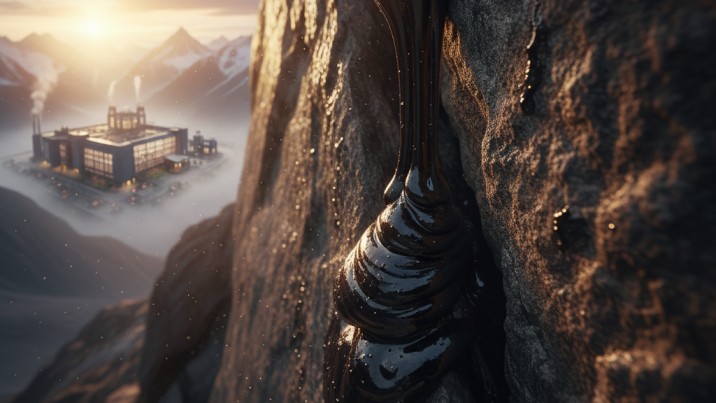
As summer heat creeps across blackened rock faces at 15,000 feet and above, a dark, tar-like substance begins to seep from cracks in the stone. It looks unnatural. Viscous. Almost alive. Locals call it Shilajit, a word often translated as conqueror of weakness.
To modern eyes, it is frequently mistaken for a mineral. To supplement companies, it is reduced to a checklist. Fulvic acid. Trace minerals. Antioxidants.
But Shilajit is neither rock nor supplement.
It is compressed time. The biological residue of ancient forests crushed beneath a rising continent. And it exists only because the Himalayas refuse to stop moving.
When Mountains Bleed
The Himalayas are geologically young and violently active. They are still rising, still grinding, still exerting pressure at a scale the human body cannot comprehend.
Millions of years ago, before the Indian subcontinent collided with Eurasia, vast forests covered the region. When the tectonic plates crashed, those forests were buried layer upon layer beneath stone.
What followed was not decay.
It was a transformation under punishment.
Under immense pressure, heat, and mineral interaction, organic matter slowly broke down and reassembled into a bioactive resin. This process took millions of years, not decades. The result was Shilajit. A substance neither fossil nor plant, but something in between.
It remains trapped inside the rock until summer heat pushes the mountain just enough to release it.
This is why Shilajit “bleeds” only during specific months.
The mountain must run a fever first.
Not a Mineral. Not a Plant. Not a Shortcut.
One reason Shilajit confounds science is that it refuses classification.
It contains:
Fulvic and humic acids
Trace minerals in ionic form
Dibenzopyrones and bioactive compounds
Elements that vary with altitude and geology
But listing components misses the point.
Shilajit is not valuable because of what it contains. It is valuable because of how those components were forced together. Pressure altered their behavior. Time stabilized them. Altitude filtered them.
A laboratory can synthesize fulvic acid in weeks.
The Himalayas took millions of years.
The Watcher’s Patience: A Story of the First Fever
Before laboratories tried to isolate Shilajit, before supplements tried to define it, the mountain revealed it through observation. Not experiments. Watching. Waiting.
There is a story told by the people of Upper Dolpo about a time before the resin had a name.
Centuries ago, high-altitude herders noticed a strange behavior among the white-headed langur monkeys. During the hottest weeks of July, the monkeys would abandon the green valleys and climb toward hostile black cliffs. These were places where nothing grew, where sunlight reflected off stone with blinding intensity.
The herders watched as the monkeys sat for hours on narrow ledges, scraping a dark, oozing substance from the rock and eating it with focused urgency. They called them the Sun-Gazers.
Curiosity eventually overcame caution. One summer, an elderly herder weakened by a brutal winter and no longer able to keep pace with his flock decided to follow them. He climbed until his lungs burned and the ground fell away beneath him. When he reached the cliff, the rock radiated heat, as if it were alive.
He scraped a small palmful of the bitter, pungent resin and swallowed it.
There was no sudden rush. No jolt of stimulation. Instead, he later described a quiet sensation, as if warmth had entered his bones and spread outward. By the time he descended, the tremor in his hands had disappeared. He was not merely stronger. He felt steadier, as though he had absorbed the stillness of the mountain itself.
This is what laboratories cannot reproduce.
The monkey and the herder were not searching for fulvic acid or trace minerals. They were responding to stored heat. Geological patience. Summer was held captive inside stone for millions of years.
When Shilajit emerges from rock, it does not offer chemistry alone. It releases time.
Why Synthetic Shilajit Exists and Why It Falls Short
As global demand surged, industry responded predictably. Isolate the active ingredient. Recreate it faster.
Fulvic acid supplements flooded the market. Pills, powders, capsules. Clean. Standardized. Shelf-stable.
But something was missing.
Consumers often reported that synthetic versions lacked depth. Energy without resilience. Stimulation without grounding.
The reason is structural, not mystical.
Lab-synthesized compounds lack:
Geological pressure history
Mineral synergy created by tectonic compression
Altitude-induced purification
Seasonal emergence cycles
You can replicate chemistry.
You cannot replicate continental collision.
Harvesting the Mountain’s Blood
Real Shilajit is not mined. It is collected.
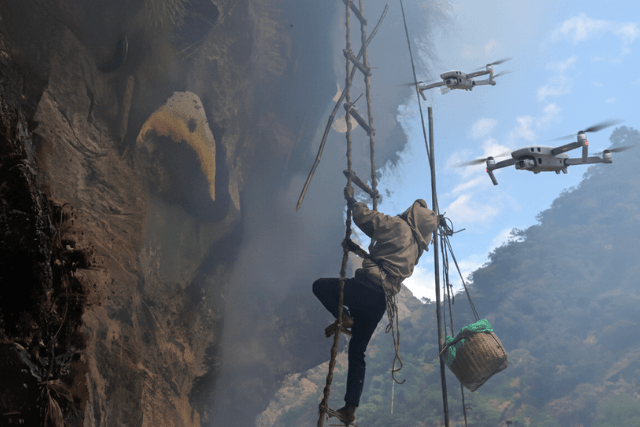
High-altitude gatherers trek to exposed cliffs during summer melt. They scrape resin by hand, often suspended on ropes, working in thin air where mistakes are fatal similar to the Amechhi's who risk their life in Mad Honey Hunting.
The raw material is then:
Dissolved in spring water
Filtered repeatedly to remove grit and debris
Sun-dried at altitude to preserve structure
This process removes impurities without sterilizing the substance. Heat remains minimal. Chemicals are absent. Time stays central.
Industrial shortcuts such as high heat, chemical solvents, or aggressive filtration remove more than dirt. They alter molecular relationships that evolved under pressure.
The FDA Problem: Translating the Mountain
When Shilajit entered global markets, it collided with regulatory logic.
Traditional use relies on instinct, taste, and experience. Modern regulation demands consistency, defined dosages, heavy metal testing, and shelf stability.
Bridging this gap took years.
Producers had to refine purification techniques without destroying bioactivity. Batch variability, once a sign of authenticity, became a liability. The mountain’s natural inconsistency conflicted with industrial expectations.
What survived was a compromise. Cleaner, safer Shilajit that still retained its geological identity.
Many products skipped this hard work.
The Problem of Fake Shilajit
As prices rose, adulteration followed.
Much of what is sold today as Shilajit contains asphalt, petroleum byproducts, resin mixed with fillers, or lab-made fulvic acid dyed black.
These substitutes look right. They smell right. They dissolve convincingly.
But they have no history.
No pressure. No altitude. No memory.
Real Shilajit softens in warmth, dissolves completely in water, and hardens again in cold. It mirrors the temperature logic of its origin.
Imitations remain static, making them dead substance.
Altitude as a Filter
One overlooked factor in Shilajit’s potency is altitude.
At elevations above 15,000 feet, ultraviolet radiation is intense. Microbial activity is low. Pollution is absent. Oxygen scarcity slows decomposition.
These conditions act as a natural purification system long before humans intervene.
Lower-altitude resins, often marketed misleadingly, lack this filtering. Contaminants accumulate. Bio-activity degrades.
Once again, the mountain does the work first.
The Myth of Standardization
Modern industry values sameness. Shilajit resists it.
Two samples from different cliffs may vary slightly in mineral composition. This variability is not a flaw. It is a geological fingerprint.
Attempting to erase that variability strips Shilajit of its identity. What remains is a product that is easier to regulate and easier to scale, but disconnected from the force that created it.
Shilajit and the Cost of Speed
As demand grows, pressure mounts to harvest earlier, collect more aggressively, process faster, and lower quality thresholds.
Each decision erodes sustainability.
Overharvesting exhausts slow-forming seams. Aggressive scraping damages rock faces and reduces future emergence. High heat destroys molecular structures that took millennia to stabilize.
The mountain does not regenerate on quarterly timelines.
The KastoChha’s Verdict: You Cannot Rush a Continent
Shilajit exists because the Himalayas are unfinished.
They are still rising. Still compressing. Still transforming buried life into something usable by living bodies today.
Science can isolate compounds. Industry can accelerate extraction.
Neither can replicate millions of years of pressure.
When you consume real Shilajit, you are not taking a supplement. You are engaging with geological time, released briefly each summer when the mountain runs hot enough to bleed.
The laboratory may copy the molecule.
But the Himalayas still own the process.