Every Japanese yen note carries a quiet contradiction.
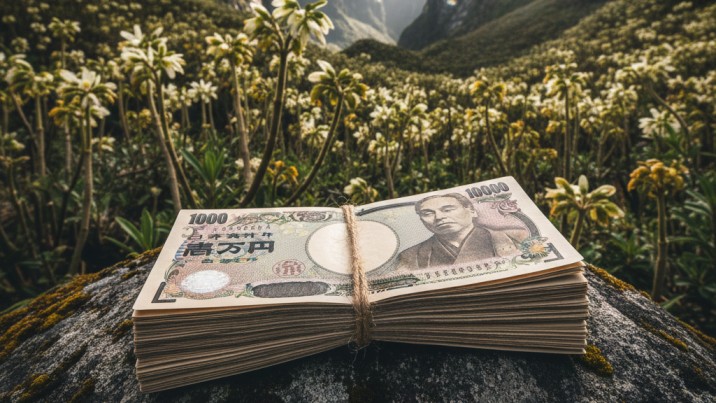
It moves effortlessly through vending machines, survives years of folding, resists forgery, and endures constant circulation. It is a triumph of modern design and security engineering. Yet at its core, quite literally, it depends on a plant that refuses modernization.
That plant is Argeli (Edgeworthia gardneri), a wild Himalayan shrub that grows on steep, unstable slopes in eastern and central Nepal. Long before digital wallets, polymer notes, and encryption, Argeli had already solved a problem most technologies still struggle with: how to be thin, flexible, and extraordinarily difficult to destroy.
This is the story of how a global financial system quietly anchored itself to a mountain that does not care about efficiency.
The Plant That Behaves Like a Material
Argeli is not a tree. It is not a crop. It is a shrub that grows between 1,500 and 3,000 meters, thriving where soil is poor, slopes are sharp, and cultivation is inconvenient.
Its bark, however, behaves like an engineered material.
When processed, Argeli fibers produce paper that is exceptionally tear-resistant, flexible without brittleness, naturally long-fibered, and resistant to moisture and decay.
These properties are not the result of selective breeding or laboratory treatment. They are the outcome of environmental stress.
Constant wind thickens fiber walls. Poor soil limits rapid growth, producing tighter cellulose structures. Cold nights slow metabolism, increasing tensile strength.
Argeli does not grow fast. That slowness is precisely why it works.
From Nepali Hills to Japanese Vaults
Japan’s relationship with Himalayan fiber is older than many assume.
For decades, Japanese papermakers searched for natural fibers capable of meeting three competing demands: durability under constant handling, compatibility with advanced printing and security features, and resistance to counterfeiting.
Wood pulp failed. Cotton alone was insufficient. Synthetic blends degraded over time.
Argeli did not.
Nepal began exporting processed Argeli fiber for specialized paper manufacturing, including high-security currency substrates. Every yen note contains a portion of this Himalayan bark, an unspoken dependency hidden in plain sight.
A farmer in Dolakha strips bark by hand. A commuter in Tokyo inserts that fiber into a ticket machine.
The connection is rarely acknowledged, but it is absolute.
The Inspector’s Bow: A Story of the “Unbreakable” Fiber
In the hills of Dolakha, there is a story often told that captures the tension between the laboratory and the mountain perfectly.
It speaks of a time when a Japanese delegation arrived to inspect the Argeli harvest. They came with silver briefcases filled with calipers, magnifying loupes, and digital tensile-strength meters. These were tools designed to measure a world the villagers understood by touch alone.
According to the story, the lead inspector was a man who had spent thirty years perfecting paper chemistry in Tokyo. He selected a single ribbon of processed Argeli fiber, no thicker than a blade of grass, and tried to snap it.
He pulled until his knuckles turned white. He wrapped the fiber around his palms and strained.
The strand did not break. It did not even stretch.
The villagers say the inspector then did something they had never seen a foreigner do. He went silent and offered a deep, formal bow to the pile of raw bark.
Later, through a translator, he explained why.
“In Tokyo, we try to build strength,” he said. “Here, you simply allow the mountain to grow it.”
That moment, the villagers say, revealed the hidden contract of the yen. It is not just a currency. It is Himalayan resilience folded into paper form.
Why Greenhouses Couldn’t Replace the Hills
As Argeli’s value became clear, an obvious question followed.
If the fiber is so valuable, why not grow it in controlled environments?
Japan tried.
Greenhouses were built. Soil nutrients optimized. Water regulated. Growth accelerated.
The result was failure.
Greenhouse-grown Argeli produced fibers that were shorter, weaker, more brittle, and structurally inconsistent. By removing hardship, the plant lost the internal grit that only environmental stress produces.
Argeli’s strength is not genetic alone. It is ecological.
The mountain does not optimize. It constrains.
The Human Process Machines Still Can’t Replace
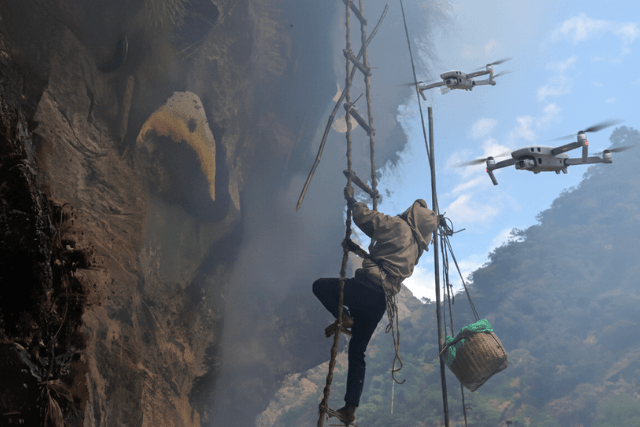
Harvesting Argeli appears simple but is deeply physical.
Farmers wait several years before cutting mature stems. Bark is stripped manually in long ribbons, then boiled in copper pots to separate fibers. No acids. No bleaching. No shortcuts.
The pulp is beaten, not shredded, until fibers interlock naturally. Sheets are formed by hand, dried in open air, and inspected visually.
Automation fails here for clear reasons.
Machines shorten fibers that must remain long. Chemical processing weakens tensile integrity. Speed introduces uniformity, and uniformity is easier to counterfeit.
Every step favors resilience over efficiency.
Currency, Counterfeiting, and Fiber Truth
Modern currency security relies on layers: watermarks, microprinting, holograms, color-shifting ink.
But beneath all of that sits the paper itself.
Argeli fiber resists tearing without visible stress, repeated folding without fatigue, ink bleeding, and easy replication.
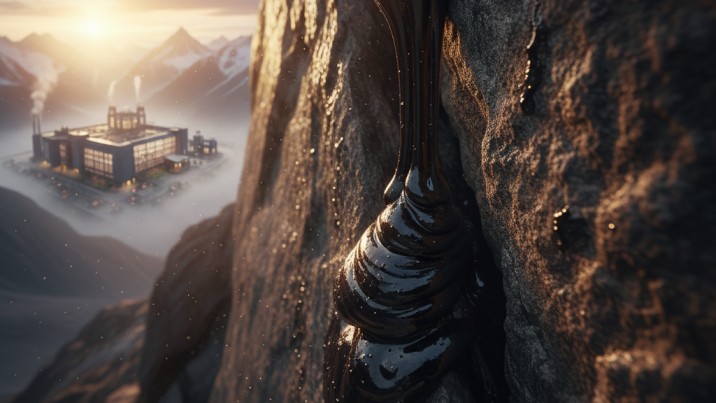
Synthetic papers can copy appearance. They cannot copy behavior, just like artificial silajit cannot copy the strength that mountain provides.
Counterfeiters struggle not because Argeli looks complex, but because it behaves differently under pressure.
The Economics of an Untamable Supply Chain
Argeli cannot be farmed like wheat. It grows wild. It regenerates slowly. It demands rotation and restraint.
Overharvesting collapses future yields. Cutting too early weakens fiber quality. Excessive harvesting destabilizes slopes and erodes soil.
This forces a supply chain built on local knowledge, seasonal timing, and long-term stewardship.
Every attempt to scale production risks destroying the very qualities that made Argeli valuable in the first place.
Once again, the mountain sets the limits.
Digital Currency vs. Physical Permanence
In an era racing toward cashless systems, physical money is often dismissed as obsolete.
Yet when digital systems fail through outages, cyberattacks, or natural disasters, physical currency remains the final fallback.
And that fallback depends on a plant that cannot be digitized, rushed, or fully industrialized.
The most advanced economies in the world still anchor trust in plant fiber.
What Argeli Really Represents
Argeli is not a relic. It is a lesson.
It shows that some forms of resilience cannot be engineered. They must be grown under constraint, harvested with restraint, and respected for their refusal to conform.
A yen note looks modern. Its soul is Himalayan.
The KastoChha Verdict: Progress Still Needs Roots
Japan’s currency is a triumph of technology. But it rests quietly on a wild shrub growing on Nepali hillsides where tractors cannot reach.
The machine tried to tame Argeli. The greenhouse tried to improve it.
Both failed.
Because strength, in this case, is not designed.
It is endured.