Every spring, the Himalayas empty their villages.
Schools close. Fields are abandoned. Entire families migrate upward, climbing past the tree line into oxygen-starved grasslands at sixteen to eighteen thousand feet. They crawl on their hands and knees, eyes inches from the soil, scanning for something almost invisible.
A brown stem. No longer than a matchstick. Worth more than gold.
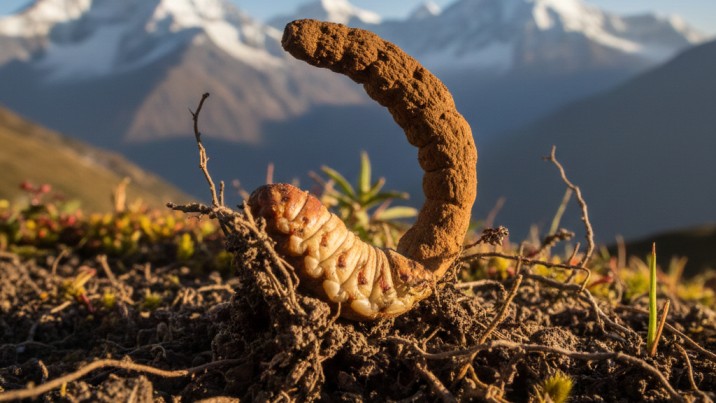
This is Yarsagumba. Half animal. Half fungus. Fully untamable.
And no machine has ever succeeded in making it.
A Thing That Should Not Exist
Yarsagumba (Ophiocordyceps sinensis) is a biological contradiction.
It begins life as a fungal spore drifting through Himalayan air. When it lands on the correct host, a single species of ghost moth caterpillar, it infects it slowly and invisibly. The caterpillar continues to live underground, feeding and burrowing, unaware that its body is being rewritten.
Then winter arrives.
The caterpillar dies.
When spring returns, the fungus erupts from the insect’s head, piercing the soil like a resurrection. What emerges is neither animal nor plant, but a preserved negotiation between death, altitude, and time.
This is not a metaphor. This is biology under extreme constraint.
Why It Became the World’s Most Desired Medicine
In Tibetan and Chinese medicine, Yarsagumba has been used for centuries as a tonic believed to enhance stamina, improve lung function, support kidney health, restore vitality after illness, and increase libido.
Its reputation exploded in the 1990s when Chinese athletes dominated endurance sports. Yarsagumba quietly entered global consciousness as a performance enhancer.
Demand surged. Supply did not.
The Machine Fails
Why the Lab Cannot Replicate the Ghost
Modern biotechnology has tried for decades to farm Yarsagumba.
Laboratories in China and the United States isolated the Cordyceps sinensis fungus and grew it in temperature-controlled vats using grain-based substrates. From a chemical standpoint, the effort looked promising.
The compounds were present. The fungus grew quickly. The yields were impressive.
And yet, the result was not Yarsagumba.
The lab fails not because it lacks intelligence, but because it removes biological friction.
To create the Ghost Fungus, three conditions must exist together.
First, the precise death of a specific caterpillar species, infected at the correct stage of life and buried at the right depth. Kill it too quickly and the fungus fails. Choose the wrong host and it fails.
Second, oxygen-starved soil at extreme altitude. Low oxygen alters fungal metabolism, forcing the organism into slower, denser chemical pathways that laboratories cannot accurately reproduce at sea level.
Third, repeated freeze and thaw cycles. Himalayan winters restructure tissue and chemistry over months. Machines work in hours. Yarsagumba works in seasons.
In a lab, the fungus is comfortable. In the wild, it is desperate.
That desperation is the source of the potency the market craves.
Science can synthesize compounds. It cannot synthesize desperation.
Why Synthetic Versions Feel Empty
Modern supplements advertise Cordyceps extracts with impressive compound lists. What they lack is interaction.
Yarsagumba’s chemistry evolved together under stress, inside a dying organism, beneath a mountain. Remove one variable and the effect flattens.
Science can copy ingredients. It cannot copy relationship.
Buyers know the difference. Traders inspect elasticity, scent, color, and break pattern. Cultivated versions look correct but feel wrong. Markets respond accordingly.
Voices from the Tundra: The Price of Himalayan Gold
The Empty Villages
Every May, a strange silence settles over Nepal’s mid-hills.
Schools close. Health posts sit empty. Entire families, from grandfathers to children barely ten years old, lock their doors and begin a week-long climb toward the five thousand meter mark.
This is the Yarsa migration.
They move into high-altitude tent cities, living under tarpaulins on frozen ground. They are not looking for a plant. They are looking for school fees, medical bills, and a way out of poverty.
Pasang and the Harvest of the Blind
Pasang, a harvester from Mugu, explains the toll no machine could endure.
“You spend twelve hours a day on your hands and knees in the snow,” he says. “The sun burns your eyes. We call it snow blindness. By the end of the month, your vision is red and weeping, and your fingernails are worn down from scratching frozen earth.”
The body pays long before the mountain does.
When the Mountain Takes Back
The tragedy of Yarsagumba is measured in lives.
In 2023 alone, more than a dozen harvesters died. Some slipped from icy ridges while racing rival villages to new patches. Others succumbed to high-altitude cerebral edema, their brains swelling as they refused to descend, afraid of missing the one find that could fund their child’s education.
An elder in Dolpa put it simply.
“The mountain asks for a life every year. We find the Yarsa, but the mountain finds us.”
The Ghost of Extinction
The machine’s hunger has created a silent spring.
Because Yarsagumba is harvested before it releases spores, the next generation never forms. Where harvesters once found fifty pieces in a day, they now find five.
As supply shrinks, prices rise. As prices rise, risks intensify. The ghost becomes rarer, and the hunt becomes deadlier.
The mountain is being asked to behave like a factory.
It refuses.
Why Farming Always Collapses
China invested millions trying to domesticate Yarsagumba.
They succeeded in growing fungus. They failed to grow value.
Cultivated versions lacked potency, complexity, and trust. Buyers could tell. Stress was missing. Without altitude, deprivation, and death, the organism lost its edge.
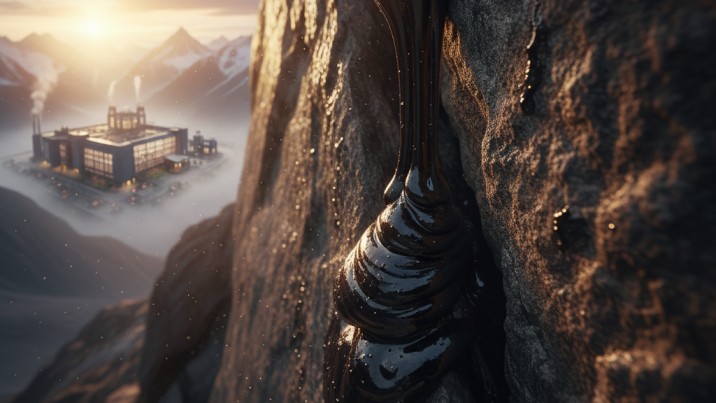
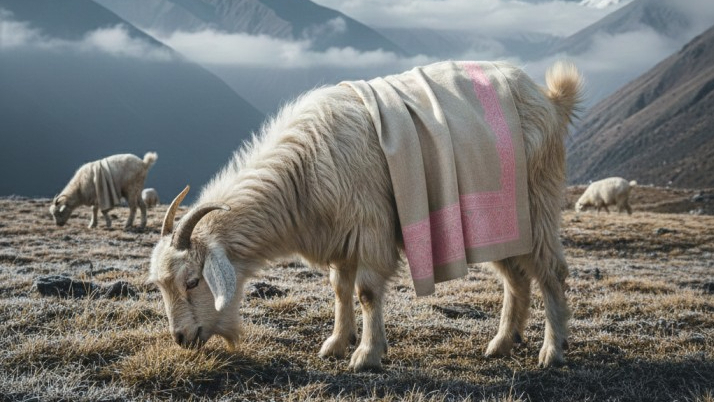
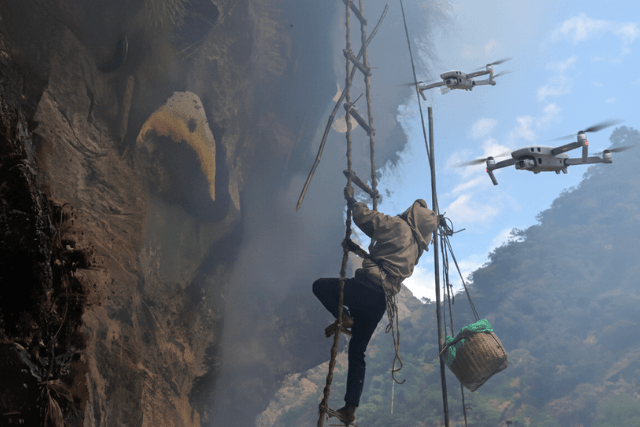
Just as with pashmina, shilajit and mad honey, comfort stripped meaning from biology.
The Philosophy Inside the Fungus
Yarsagumba embodies an old Himalayan truth.
Life emerges through death. Strength emerges through constraint. Value emerges through rarity.
It cannot be rushed. It cannot be engineered.
It cannot be comforted into existence.
The Verdict: You Cannot Manufacture a Miracle
Pharmaceutical labs can isolate molecules. They can optimize dosage. They can replicate fragments.
But Yarsagumba is not a formula.
It is a contract between altitude, death, time, and patience.
The caterpillar must die slowly. The fungus must wait. The mountain must allow it. And humans must crawl.
The ghost hunt continues not because science is weak, but because some things only exist where the earth still refuses negotiation.